FWSC says consultations on proposed public pay commission will continue
The Fair Wages and Salaries Commission says consultations on the proposed Independent Public Emoluments Commission will continue until its Bill becomes law. The proposed body would oversee a broader framework for public sector remuneration, with a phased transition and protections for lawful collective bargaining.
myjoyonline.comFWSC urges media to guard against misinformation in proposed IPEC transition
graphic.com.ghConsultations on IPEC’s establishment to continue — Fair Wages CEO
Consultations to continue
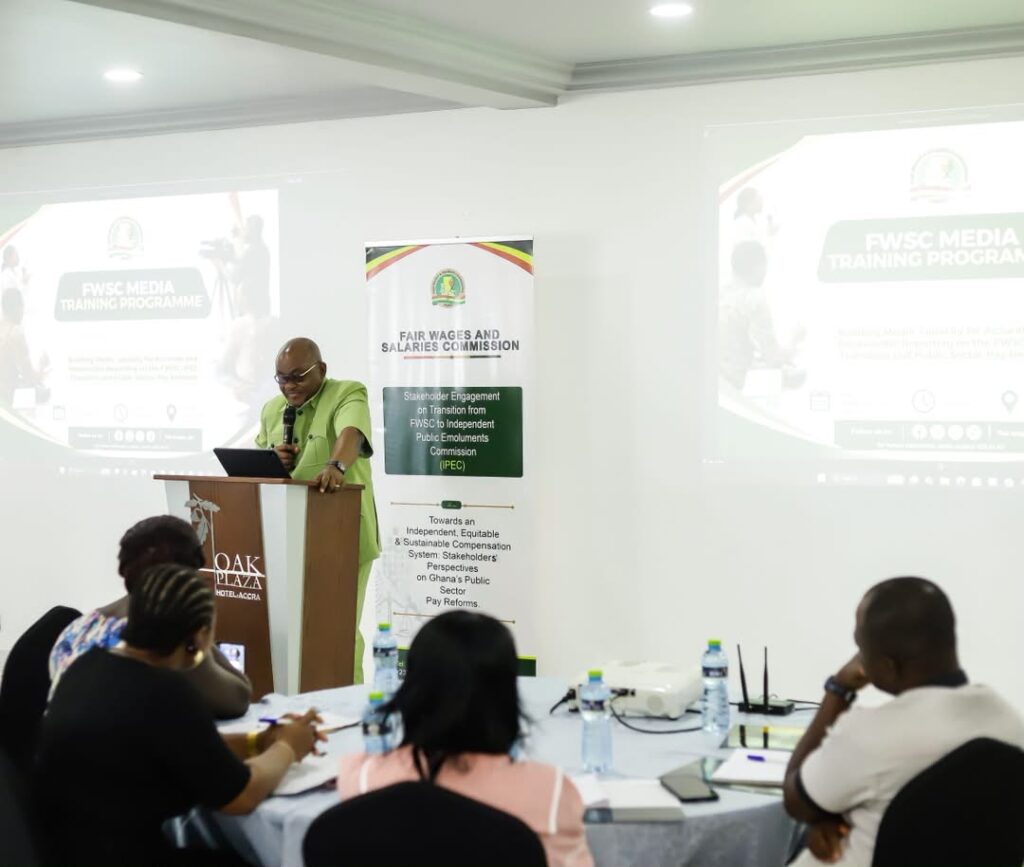
The Fair Wages and Salaries Commission (FWSC) says stakeholder consultations on the proposed Independent Public Emoluments Commission (IPEC) will continue until the legislation establishing it is passed. Chief Executive Dr George Smith-Graham made the commitment at a two-day training programme for journalists on the proposed transition and public sector pay reform.
He said IPEC would strengthen the framework for determining, reviewing, certifying and monitoring public sector remuneration, subject to the Constitution. Under the proposed arrangement, public sector organisations would need IPEC certification before implementing salary structures, he said.
Looking beyond basic salaries
Smith-Graham said the Single Spine Pay Policy had provided a common basis for evaluating jobs and setting basic salaries, but differences in allowances, housing, transport and other benefits continued to create disparities in total compensation. The proposed framework would consider the full range of financial rewards attached to public employment and office.
He said fairness did not mean equal salaries for everyone: differences could be justified by responsibilities, scarce expertise, risk or hardship, but should be supported by evidence. Remuneration proposals would also be assessed for legality, equity, full cost and budget provision, subject to the powers granted by the final law.
Phased transition and bargaining
The proposed transition would begin with stakeholder consultations, preparation and passage of the IPEC Bill, and arrangements to make the institution operational. The roadmap also envisages establishing IPEC as a constitutional body through the appropriate constitutional processes.
A further phase would consider bringing Article 71 office holders under its remit through the relevant constitutional amendment process, including a national referendum where required.
Smith-Graham said the reform would preserve lawful collective bargaining, while seeking to make negotiations more predictable through reliable information, transparent parameters and affordability assessments.