Asantehene launches Jimi restoration project as major works await permit
Asantehene Otumfuo Osei Tutu II has marked the launch of a 153-hectare project to restore mining-damaged land and the Jimi River near Obuasi. Organisers say major reclamation works await an environmental permit, as pollution and sedimentation put pressure on local water supplies.
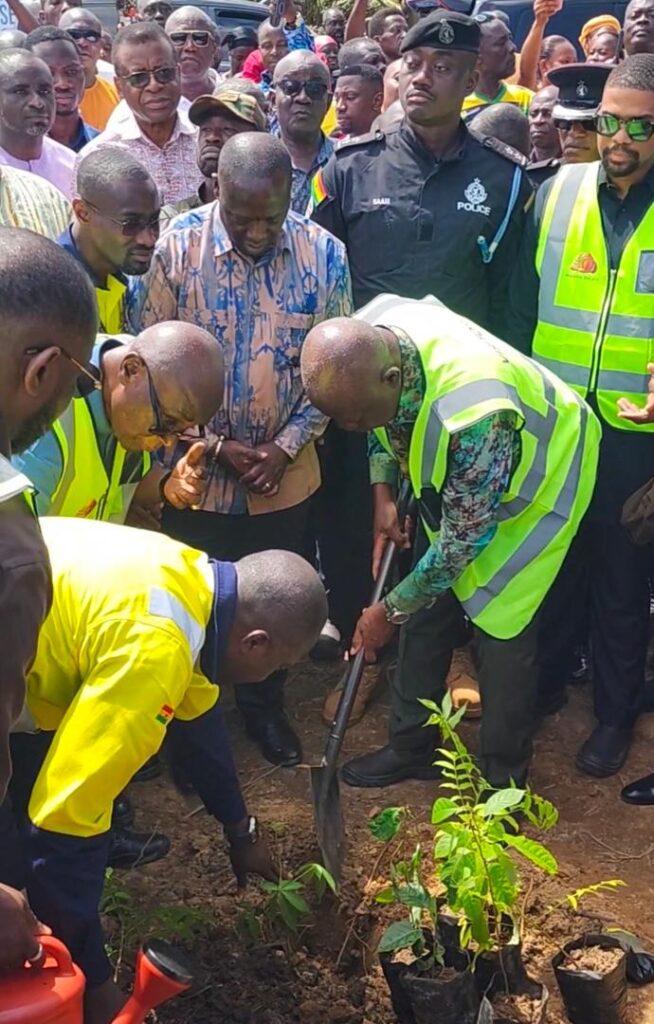
myjoyonline.comAsantehene plants trees to commence Jimi Watercourse Rehabilitation destroyed by galamsey
starrfm.com.ghJimi Land reclamation: “We want to restore soil health before planting food crops – Oheneba Nana Kwaku Duah
Restoring land and water
Asantehene Otumfuo Osei Tutu II planted trees and inspected the Jimi Land Reclamation and River Watercourse Rehabilitation Project during an October 14 visit, joined by Lands and Natural Resources Minister Emmanuel Armah-Kofi Buah. The project aims to repair damage caused by illegal small-scale mining, known as galamsey.
The Ashanti Green Initiative is leading the project, with technical and operational support from AngloGold Ashanti. It targets approximately 153 hectares across three lots in Obuasi East Municipality and the Adansi Akrofuom and Adansi Asokwa districts.
Major works await approval
Initiative chief executive Oheneba Nana Kwaku Duah said major reclamation works could begin only after the Environmental Protection Authority completed its permitting process. Engineering firm Zutari was finalising design information needed for the application, he said.
He hoped substantive work could begin before the end of 2026 and committed to completing at least one lot by the end of the following year. Final costing and tendering would follow the permitting process.
Water supplies under pressure
Mining has stripped vegetation, contaminated soil and left open pits along the river. At Tasliman, miners diverted the watercourse with heaps of sand, contributing to siltation that threatens the Jimi Dam, which supplies water to more than 200,000 people in Obuasi and Adansi.
AngloGold Ashanti engineering director Eric Broni said declining water levels and rising treatment costs were forcing rationing. He said about $584,000 was spent treating water the previous year despite a reduction in the quantity treated.
The Asantehene acknowledged that unemployment pushed young people into illegal mining but warned against sacrificing water resources and community health for immediate income. He called for environmental protection alongside alternative livelihoods.
Kenaf chosen before food crops
Planned restoration includes backfilling mining pits, regrading damaged terrain, managing contaminated soil, installing drainage and erosion controls, and restoring topsoil.
Organisers have selected kenaf, a fibre crop, because of its potential to help rehabilitate contaminated soil and provide material for sustainable packaging. Oheneba Nana Kwaku Duah said soil health needed to be restored before food crops were planted; residual contamination was a reason for choosing kenaf instead.